Mathematical Units

A term of measurement

in mathematical pedagogy.

Note: These posts were written during my early teaching years in a remote Australian school. They remain here as part of my professional archive: imperfect, reflective and rooted in a particular time and context. Some language and thinking has naturally developed since then, but the posts document an important stage in my growth as an educator.

It is commonly accepted that numeracy is an essential part to any education experience. Lamb (1997) suggests that the life success of a student can be determined by their performance in Year 10 numeracy. Of course this is only one variable in a life ever impacted by a changing world.

To develop a unit of mathematics in a remote Aboriginal community – we need to consider the context in which we operate. When we look at broad Aboriginal cultures, they operate in vastly different ways to broad Western cultures. Of course this is painting with broad brush strokes and we need to add additional nuance to the conversation.

When discussing educational model in Environmental Science with First Nations of Canada, Rajan Datta considers a philosophy of, ‘land-based education [teaching] how to decolonize land and seeks socio-ecological justice in personal and pedagogical practices.’ This is part of a response to the notion of Western science and its flaws. Some of these ideas from Datta can be transposed across curriculum.

In a remote desert context, we must accept the reality that it is incredibly difficult to teach mathematics that has no apparent relevance. In developing a mathematical unit, there was a particular emphasis on establish the culture of mathematics within the classroom. Some open ended questions to reflect on as the unit progresses may include;

  1. What are students understandings of what mathematics is?
  2. To what extent does community context impact the subject?
  3. How important is mathematics to the School and broader community?
  4. Is it important to change the pedagogical approach of mathematics?

In 2008 Douglas McCarty put forward the following to a conference;
Firstly, it must be recognised that Mathematics consists of concepts expresed initially in everyday spoken discourse (plain language), then code into the particular vocabulary of Mathematics and then into a written symbolic code that is the shorthand that we process on the page.”

A thought worth thinking about over the school holidays.

References:

1Lamb, S. (1997). School Achievement and Initial Education and Labour Market Outcomes. Longitudinal Surveys of Australian Youth. Research Report.

2Ranjan Kumar Datta (2016): Rethinking environmental science education from indigenous knowledge perspectives: an experience with a Dene First Nation community, Environmental Education Research, DOI: 10.1080/13504622.2016.1219980

3McCarty, Douglas (2008). Losing Them Young – Puberty, Culture and the Tragedy of Middle School Mathematics.

AITSL Standards: 1.3, 1.4, 2.1, 2.2, 2.4, 2.5, 3.1, 3.2, 3.3, 6.1
A Curriculum Map

A compass to point you

in the direction of North.

Note: These posts were written during my early teaching years in a remote Australian school. They remain here as part of my professional archive: imperfect, reflective and rooted in a particular time and context. Some language and thinking has naturally developed since then, but the posts document an important stage in my growth as an educator.

Van de Klink (2017) et al. opens the introduction of a journal article with, ‘There is growing recognition that teacher educators can only continue to act as professionals if they are engaged in further professional development throughout their entire career.’1 It is a fascinating article that discusses the lack of comparison of teacher development worldwide, and draws on rich literature that supports the necessity for learning.

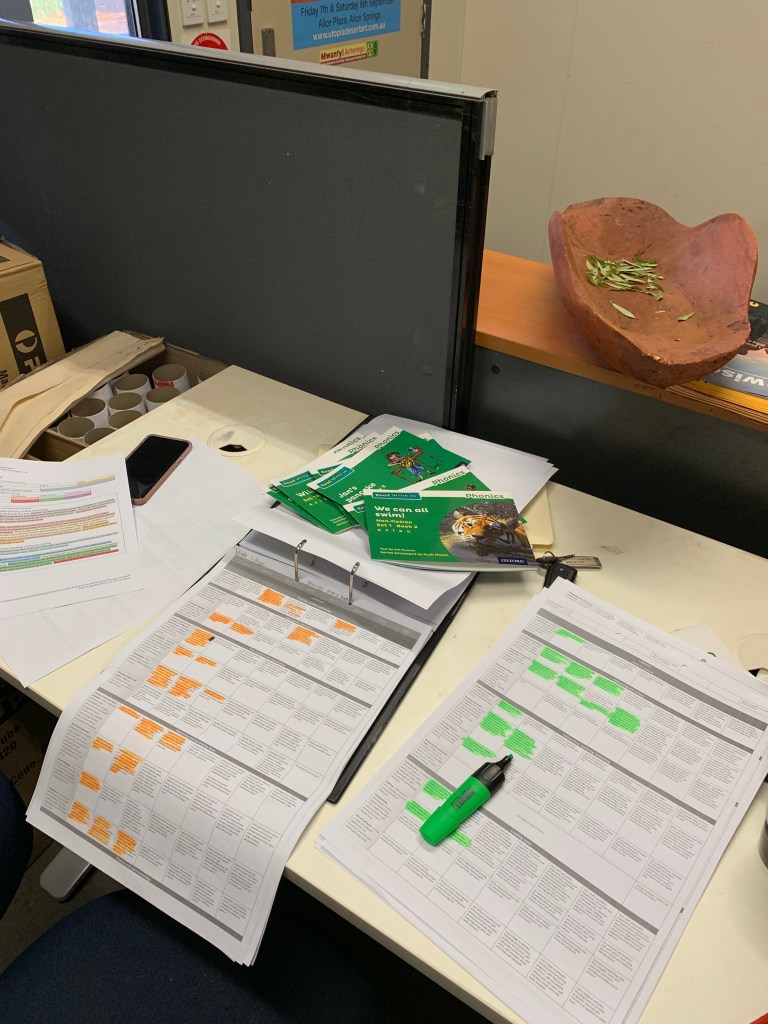
Looking to continue to develop my weaker points as an educator, I recently took an opportunity to consider and reflect on Read Write Inc. materials and how they link to the Australian curriculum. Having gone through tertiary education in the field of Mathematics, Physics and History – I acknowledge it will be beneficial for my professional growth to peruse the English curriculum.

In a previous blog post I have touched on Read Write Inc. and its pedagogical approach. As an education team, we looked to map the context covered through the program to the The Australian Curriculum, Assessment and Reporting Authority (ACARA) English Curriculum.

This drew some fascinating moments of reflection, as each educator had nuanced way of viewing the resource.

I offered to continue the process in collaboration with another teacher, for an additional hour or two, for my own development. The conversations that resulted were underpinned by robust professional debate over what definitions in the curriculum meant, and how they applied to the resource.

In an analysis of Finnish teachers by Maaranen et al. (2018) they found, ‘Informal professional development included a theme such as personal learning,’ and that, ‘Many teacher educators had participated in some kind of voluntary, free-time education.’2 We take this moment to reflect on the value of passionate teachers and how a desire to consistently improve practise should never be understated.

Fundamentally, teachers need to know their students and how to teach them. With each additional piece of knowledge, I enable the students in my class to receive the best teaching pedagogical they can. By undertaking a review of the RWI program and looking to link it into the English Curriculum, I improved my practise.

References:

1Marcel Van der Klink, Quinta Kools, Gilada Avissar, Simone White & Tetsuhito
Sakata (2017) Professional development of teacher educators: what do they do? Findings from an explorative international study, Professional Development in Education, 43:2, 163-178, DOI: 10.1080/19415257.2015.1114506

2Maaranen, K., Kynäslahti, H., Byman, R., Sintonen, S., & Jyrhämä, R. (2018). ‘Do you mean besides researching and studying?’Finnish teacher educators’ views on their professional development. Professional Development in Education, 1-14.

AITSL Standards: 2.1, 2.2, 2.3, 2.5, 3.3, 3.6, 4.1, 6.2, 6.3, 6.4

Learning a Local Language

How a dictionary launch

ties into the role of a teacher.

Note: These posts were written during my early teaching years in a remote Australian school. They remain here as part of my professional archive: imperfect, reflective and rooted in a particular time and context. Some language and thinking has naturally developed since then, but the posts document an important stage in my growth as an educator.

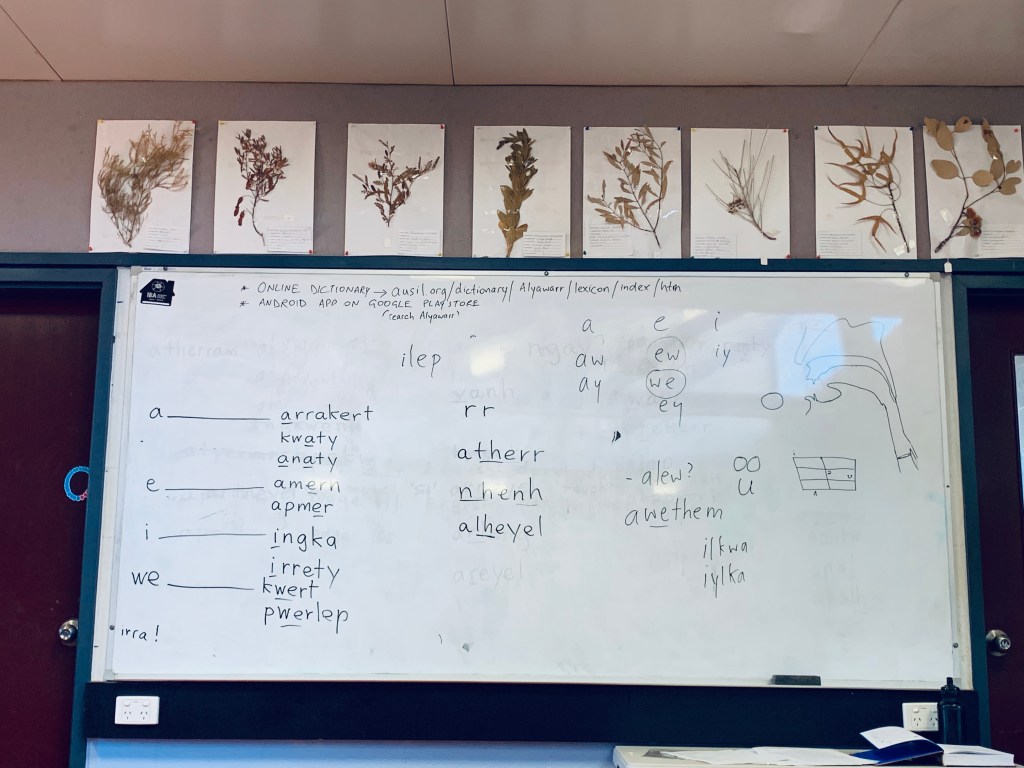
Recently in community there was the launch of a dictionary that translates words in a local dialect into English definitions. As an event, it brought together the worlds of education, politics and community. It was a fantastic opportunity to engage with parents and community.

A community approach to education can be powerful. When we consider the impact that an event like this can have – it is potentially immense in the literacy of an entire region. Hobson (2010) notes that “…communities must be mindful that positive outcomes in classrooms alone are not enough to revitalise languages. The effort must be broader than just schools, and language communities must be vigilant to retain control of their languages…”

In this education context, we need to consistently reflect on the backpack of knowledge that students bring into the classroom. On traditional Aboriginal lands, there is a reality that English is a second (or third, or fourth..) language. A dictionary launched in a traditional language solidifies the identity we want our students to aspire to have. This is not confined to the English curriculum either. When we consider mathematics as a discourse, English as a second language may have an impact on numerical achievement.

The above is comparable when immersion in traditional language is compared around the world. Guèvremont, A., & Kohen, D. E. (2012). report that, “Maori students educated in Maori immersion programs in state-funded schools had similar rates of literacy and numeracy achievements as non-Maori students and fared better than Maori students in non-immersion programs.”

There is also a poetry symbolism to attending the event. It shows a support of traditional language, on traditional lands. That might be the most important aspect of it all.

References:

1Guèvremont, A., & Kohen, D. E. (2012). Knowledge of an Aboriginal language and school outcomes for children and adults. International Journal of Bilingual Education and Bilingualism15(1), 1-27.

2Hobson, J. R. (Ed.). (2010). Re-awakening languages: Theory and practice in the revitalisation of Australia’s Indigenous languages. Sydney University Press.

Blackman, D., Green, J., & Moore, D. (2019). Alyawarr Dictionary. IAD Press.

AITSL Standards: 1.2, 1.4, 2.4, 2.5, 6.4, 7.3, 7.4

An Education Journey

The start is a good

place to begin.

Note: These posts were written during my early teaching years in a remote Australian school. They remain here as part of my professional archive: imperfect, reflective and rooted in a particular time and context. Some language and thinking has naturally developed since then, but the posts document an important stage in my growth as an educator.

A late mentor through my days at University once told me that, “while teachers may not save lives, they change them.” I still carry these words forwards and use them to underpin my teaching philosophy. Education is one of the most powerful things we know as a society.

When we frame the importance of education in a modern context, we start to see an intersection of research, philosophy and practice. John Dewey is quoted as saying, “If we teach today’s students as we taught yesterday’s, we rob them of tomorrow.”1 The relevance of this is poignant in a school that is classified as extremely remote. Here, it is a harsh, arid landscape where we strive to improve educational outcomes. In 1974 the discovery of ‘Mungo Lady’ by scientists estimated an Aboriginal culture cultivating the continent for 40,000 years.2 With modernised scientific measures this figure is now a conservative estimate. It is evident that the oldest surviving culture in the world will continue to thrive. Though in modern Australia we juxtapose an ancient culture with a Westernised society imposed across the land. There is a necessity to decode English and comprehend mathematical discourse to become an active citizen in a globalised world. Garrison, Neubert & Reich (2012), in reflecting on the philosophy of Dewey, ask the important question, ‘how can we account for the fact that in everyday as well as in scientific thought and in the history of education there is a recurrent tendency to rely on nature and forget the import of culture?”3

This is where the journey begins. There are questions of teaching philosophy, effective pedagogy and innovative approach in an ever changing world. This is in the frame of a schooling context in an isolated community, with a rich and ancient culture. The blog is a space for reflection and celebration of a teacher starting a journey. It presents an opportunity to challenge a conventional teaching approach. As teachers, we should always be on a pursuit to change lives.

1 A quote by John Dewey. (2019). Retrieved 20 October 2019, from https://www.goodreads.com/quotes/833916-if-we-teach-today-s-students-as-we-taught-yesterday-s-we

2 Roberts, R. G., Russell, L., & Bird, M. I. (2018). Fifty years ago, at Lake Mungo, the true scale of Aboriginal Australians’ epic story was revealed.

3 Garrison, J., Neubert, S., & Reich, K. (2012). John Dewey’s philosophy of education.

AITSL Standards: 1.3, 1.4, 2.4, 6.1, 7.4