How a dictionary launch
ties into the role of a teacher.
Recently in community there was the launch of a dictionary that translates words in a local dialect into English definitions. As an event, it brought together the worlds of education, politics and community. It was a fantastic opportunity to engage with parents and community.
A community approach to education can be powerful. When we consider the impact that an event like this can have – it is potentially immense in the literacy of an entire region. Hobson (2010) notes that “…communities must be mindful that positive outcomes in classrooms alone are not enough to revitalise languages. The effort must be broader than just schools, and language communities must be vigilant to retain control of their languages…”
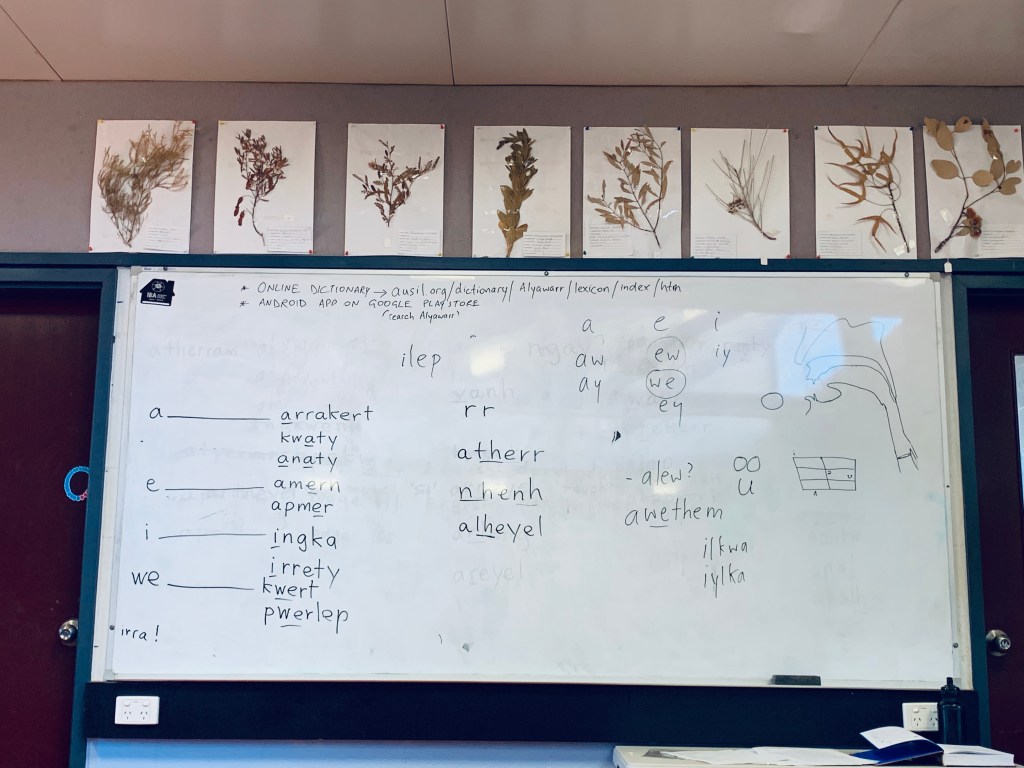
In this education context, we need to consistently reflect on the backpack of knowledge that students bring into the classroom. On traditional Aboriginal lands, there is a reality that English is a second (or third, or fourth..) language. A dictionary launched in a traditional language solidifies the identity we want our students to aspire to have. This is not confined to the English curriculum either. When we consider mathematics as a discourse, English as a second language may have an impact on numerical achievement.
The above is comparable when immersion in traditional language is compared around the world. Guèvremont, A., & Kohen, D. E. (2012). report that, “Maori students educated in Maori immersion programs in state-funded schools had similar rates of literacy and numeracy achievements as non-Maori students and fared better than Maori students in non-immersion programs.”
There is also a poetry symbolism to attending the event. It shows a support of traditional language, on traditional lands. That might be the most important aspect of it all.
References:
1Guèvremont, A., & Kohen, D. E. (2012). Knowledge of an Aboriginal language and school outcomes for children and adults. International Journal of Bilingual Education and Bilingualism, 15(1), 1-27.
2Hobson, J. R. (Ed.). (2010). Re-awakening languages: Theory and practice in the revitalisation of Australia’s Indigenous languages. Sydney University Press.
Blackman, D., Green, J., & Moore, D. (2019). Alyawarr Dictionary. IAD Press.
AITSL Standards: 1.2, 1.4, 2.4, 2.5, 6.4, 7.3, 7.4
 The Remote Teacher