When communication breaks down, imagination takes over
One of my favourite sayings from an old Dean of Education (or somebody before them) is that when communication breaks down, imagination takes over. It is easy to forget how impressionable we are as educators. How as we communicate each day in the classroom, our tonality, body language and chosen words can impact the reaction of our students.
Feeling a little less green now as I approach 12 months in central Australia and 6 months with my current cohort (admittedly, a chaotic 6 months), I find myself reflecting on the classroom culture we have created. I find myself reflecting on how classroom culture is fluid and will always continue to change. I am shocked when my students notice if I am down by a few percentage points, asking me if I’m “little bit sleepy” or “you little bit sad”.
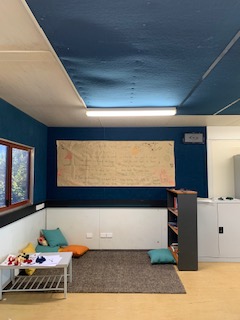
One of the things I am proud of in our classroom is our set of co-created rules and expectations. Back in week 1, before coronavirus was a thing, the students and I stood around a table and created our expectations together. It is astounding at what students can come up with when you ask them, ‘what can we do so that we all feel safe in this classroom space’. Some of the co-created rules are;
- It is a happy place to come
- We save the drumming for music time
- Teacher does their best not to growl
- We keep out space clean
- Respect is important
We have our class expectations clearly displayed in our classroom so we can always reference them.
Having students create our expectations has allowed easier communication because students boughtinto the process. This provides clear expectation for students. Khan (et al. 2017) reported in a study that ‘the majority of students opined that they learn well from those teacher who has good communication skills or who adopt food communication skills.’1
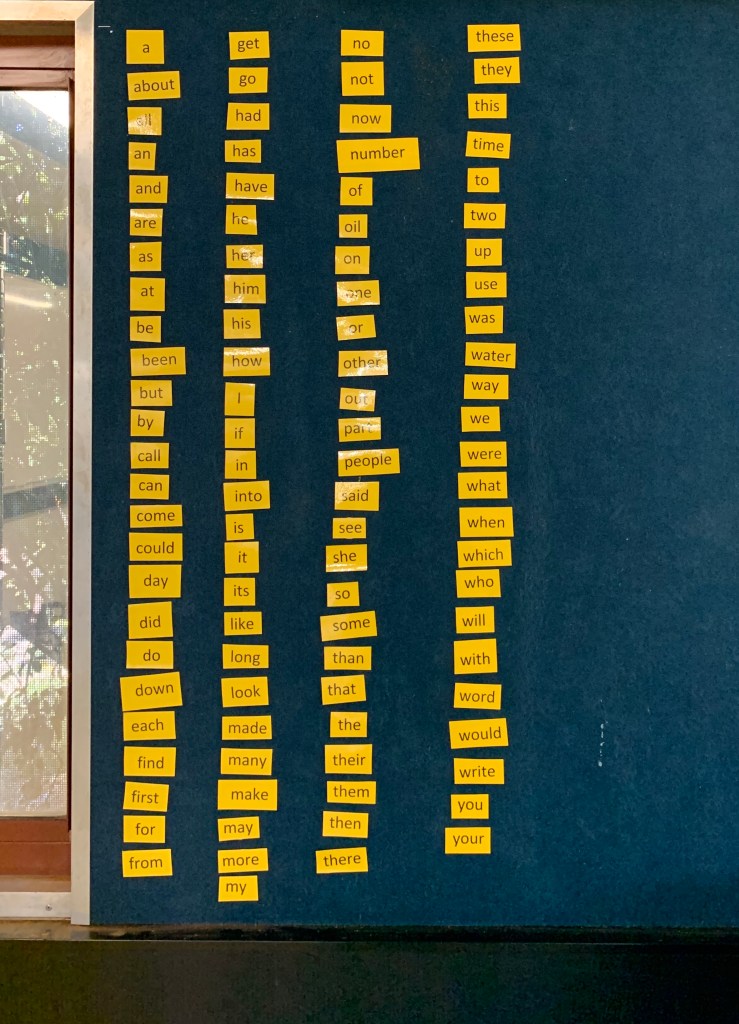
We create a classroom relevant to our students. In a remote Indigenous context, list of commonly used English words on the wall is essential. When students are writing stories, the last thing I want as an educator is a barrier to showing evidence of learning. A study of high school students in Auckland found that one disengaged group of students, ‘disliked writing so much, [that] the ability to choose between different types of writing tasks made little difference to their overall engagement, because any task that involved was regarded in the same negative light.’2 Sometimes the engagement of students is indeed an uphill task.
The last thing I will touch on is routine. If you read my last blog you may remember how I wrote that routine assisted in challenging behaviour. I would also take the opportunity here to add that routine is an essential part of a class communication strategy. This needs to be unpacked further in a further post.
—
References
1Khan, A., Khan, S., Zia-Ul-Islam, S., & Khan, M. (2017). Communication Skills of a Teacher and Its Role in the Development of the Students’ Academic Success. Journal of Education and Practice, 8(1), 18-21.
2Hawthorne, S. (2008). Students’ beliefs about barriers to engagement with writing in secondary school English: A focus group study. Australian Journal of Language and Literacy, The, 31(1), 30.
AITSL Standards: 3.3, 3.5, 4.1, 4.2, 4.4
 The Remote Teacher