Reflecting on the success of emotional growth.
On Tuesday the 28th of January, I faced my new class for the first time. Over the coming few blogs, I intend to share some targeted professional reflections from the year. At the start of the year we had no anticipation of a disrupting pandemic, a global movement for racial justice, or on a local scale – the opening weeks to be filled with rain.
Perhaps the latter was the most important lesson to learn. In an isolated community you are at the mercy of the weather. Suddenly local roads were closed and people were at risk of being blocked in by a flowing river. The rain also brought in my arch nemesis, an army of flies.
41 teaching weeks later and I have grown in my knowledge and learnt many lessons. One of the most rewarding things to come from the year, has been the celebration of my students’ emotional development. This was a focus area for my planning at the beginning of the year.

At the beginning of the year I introduced a journal book to each student. Hardly an original idea, but in a classroom of male identifying students, I was not confident of success. After the introduction and the teacher spiel about the benefits of journaling, I was shocked to have the next half an hour of complete silence as each student jumped into the activity.
The brief was simple; write whatever is on your mind and forget about English spelling and punctuation. This is your book and I will only read the stories you choose to share. At a minimum, this activity allowed the students to begin to develop their sense of identity. At best, writing has been found by the American Psychology Association as a healer of negative experiences.1
This activity built to become a beautiful release from a trauma stricken classroom. The lines of a journal became a place where the students could build descriptive imagery of the lives they endured each day. At one particularly challenging point of my own journey this year, I turned to the stories I was permitted to read. I did not expect to be so humbled by the stories that were shared. While the activity may not always be useful, studies have shown that the art of writing can have fantastic physical benefits as well.2
In the second term we started a daily gratitude practise. We know from the research that a daily gratitude routine, if in place for a month, can significantly change a person’s perspective.3 This activity quickly grew in popularity to the point where the students now tell me if we haven’t completed the task on any given day!
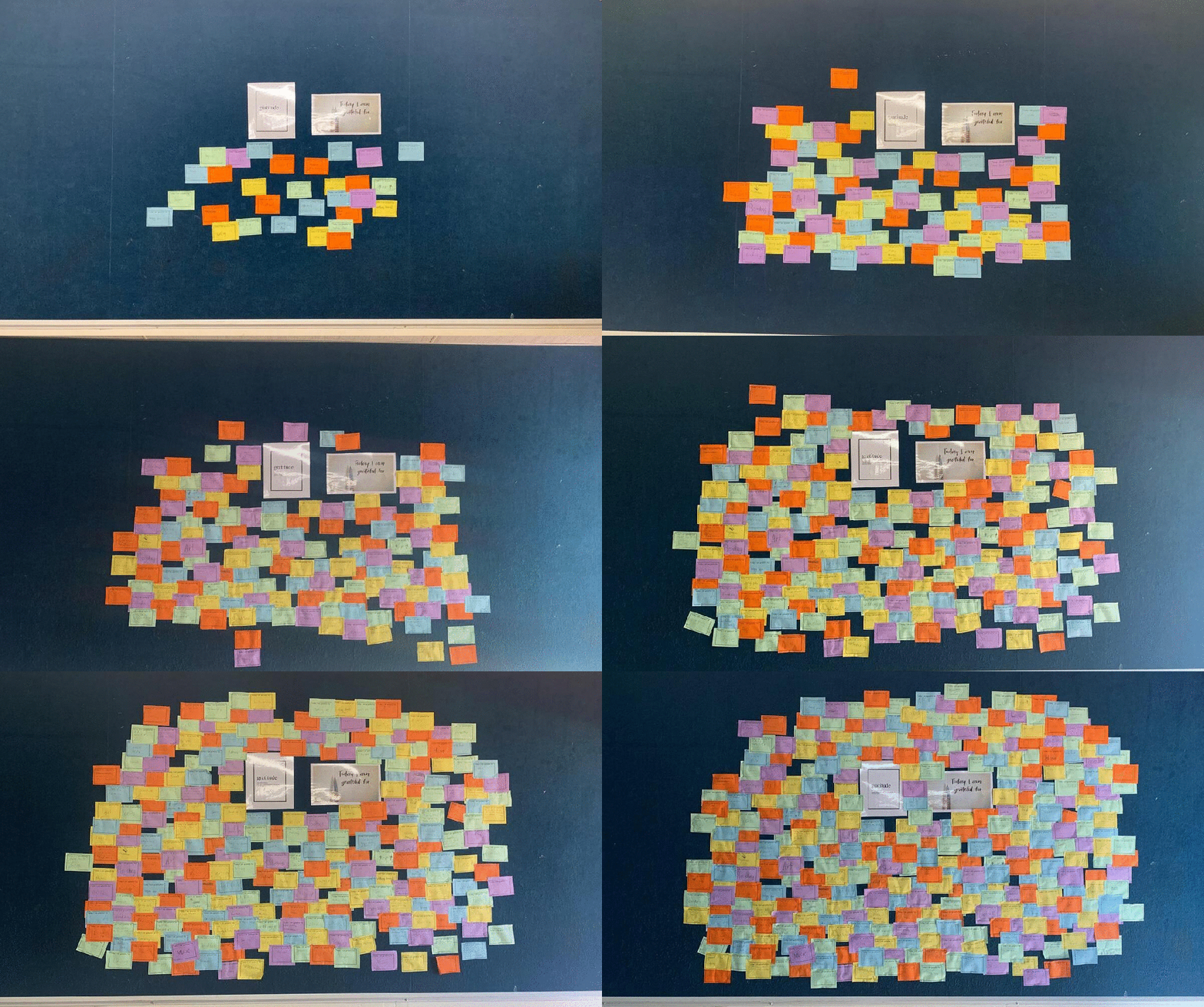
The two above activities are examples of how small steps can make a big difference in a classroom setting. Both activities encourage participation, while neither of them expects perfection. This allows students struggling with a trauma background to feel secure enough to have a go at either one. It also accommodates a classroom filled with students learning English as an Additional Dialect.
I have seen in my students the growth of confidence. From quiet and shy humans in the first term, to curious and reflective students towards the later part of the year. The ability to ask questions of the world around us, and our place in it, is still fundamentally part of the education process.
—
References
1Writing to heal. (2020). Retrieved 14 December 2020, from https://www.apa.org/monitor/jun02/writing#:~:text=Writing%20is%20no%20stranger%20to,terminal%20or%20life%2Dthreatening%20diseases.
2Hammond, C. (2020). The puzzling way that writing heals the body. Retrieved 14 December 2020, from https://www.bbc.com/future/article/20170601-can-writing-about-pain-make-you-heal-faster
3Publishing, H. (2020). Giving thanks can make you happier – Harvard Health. Retrieved 14 December 2020, from https://www.health.harvard.edu/healthbeat/giving-thanks-can-make-you-happier
AITSL Standards:
 The Remote Teacher